

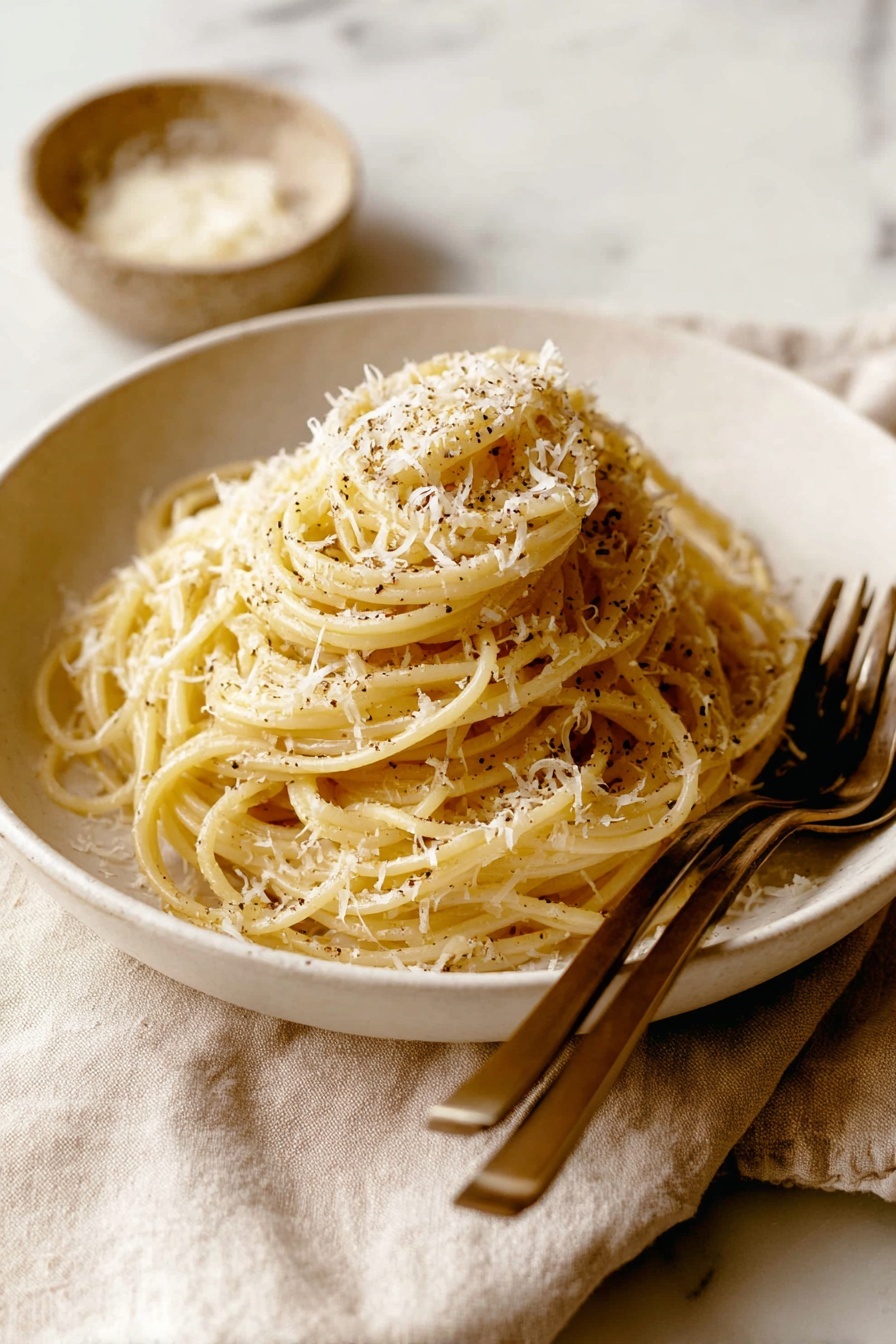
If you’re looking for a simple yet stunning pasta dish that delivers maximum flavor with minimal ingredients, you’re going to adore this Cacio e Pepe Pasta Recipe. I absolutely love how this classic Roman dish transforms just a few pantry staples into a creamy, peppery delight that feels both comforting and fancy. When I first tried this recipe, I was amazed at how easily it came together and how everyone at the table couldn’t stop asking for seconds!
Why You’ll Love This Recipe
- Simplicity at Its Finest: Just a handful of ingredients come together quickly for a homemade taste that feels gourmet.
- Creamy, Peppery Goodness: The warm pasta water creates a luscious sauce that clings to every strand perfectly.
- Family Favorite: My loved ones can’t get enough of this dish—it’s a regular in our dinner rotation.
- Perfect for Busy Nights: From start to finish, it takes about 15 minutes—ideal for when you want something satisfying but quick.

Ingredients You’ll Need
For this Cacio e Pepe Pasta Recipe, the ingredients list is short and sweet, but each plays a starring role in flavor and texture. Choosing quality Pecorino Romano and freshly cracked black pepper truly makes a difference, so I recommend grabbing the best you can find.
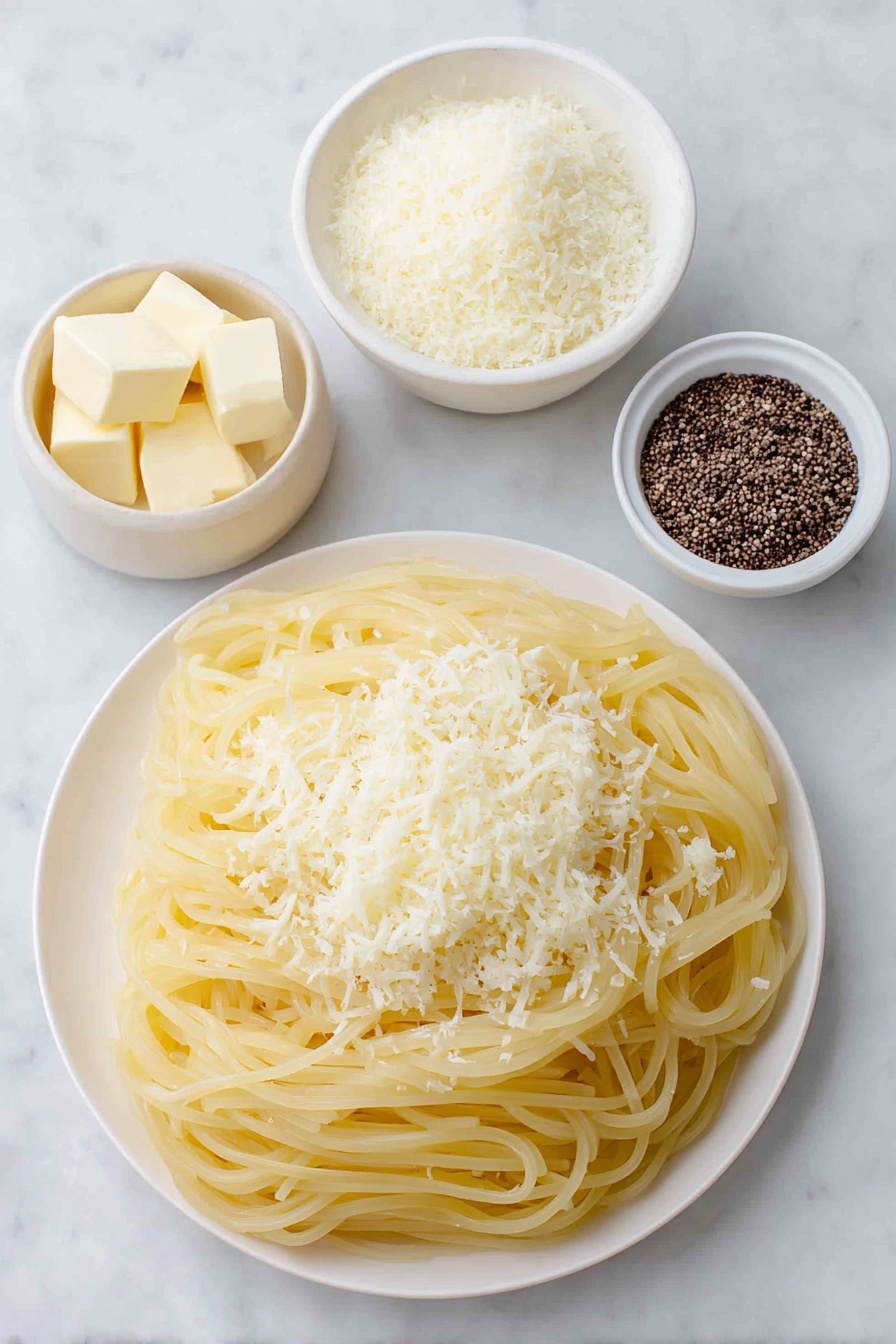
- Dried Bucatini or Spaghetti: Bucatini has a fun hollow center that catches sauce beautifully, but spaghetti works just as well if that’s what you have.
- Unsalted Butter: Adds richness and helps bring the sauce together — unsalted gives you control over seasoning.
- Freshly Grated Pecorino Romano: Freshly grated cheese melts more smoothly and tastes way better than pre-grated versions.
- Cracked Black Pepper (Toasted): Toasting the pepper deepens its aroma and flavor—you’ll notice the difference right away.
Variations
While I love this recipe classic-style, I also enjoy tweaking it now and then based on what I’m in the mood for or what I happen to have on hand. Feel free to put your own spin on this recipe — pasta is such a forgiving canvas!
- Adding Garlic: I sometimes gently sauté minced garlic in the butter before tossing the pasta—it adds a lovely fragrant note without overpowering.
- Using Different Pasta Shapes: Tried this with bucatini, spaghetti, and even fettuccine—each brings a slightly different texture experience!
- Make it Vegan: Use a plant-based butter and nutritional yeast instead of Pecorino for a dairy-free option that still satisfies.
- Extra Pepper Kick: If you love pepper as much as I do, feel free to double the cracked pepper for a bolder punch.
How to Make Cacio e Pepe Pasta Recipe
Step 1: Boil the Pasta to Perfection
Start by filling a large pot with water and bringing it to a rolling boil over high heat. Don’t forget to add a good handful of salt to the water—it should taste like the sea! Toss your pasta in and cook, stirring occasionally, until it’s al dente. This usually takes about 6 to 8 minutes. Cooking just to al dente is key here because the pasta will continue to cook slightly when you toss it with the sauce.
Step 2: Save That Pasta Water
Before draining the pasta, scoop out about ⅔ cup of the starchy pasta water and set it aside. This step might sound trivial, but trust me—it’s the secret that transforms the cheese and butter into a silky, creamy sauce that clings beautifully to each noodle.
Step 3: Melt Butter and Stir Together
Return the drained pasta to the pot or move it into a large skillet set over low heat. Add the butter and reserved pasta water, tossing everything gently until the butter melts and starts to marry with the pasta water. This creates the perfect base for your sauce.
Step 4: Incorporate Cheese and Pepper
Now for the magic—sprinkle in the freshly grated Pecorino Romano and toasted cracked black pepper. Keep tossing the pasta vigorously but gently so the cheese melts gradually, blending into the starchy water and butter. Be patient here; this step is what gives you a luscious, velvety sauce instead of clumps of cheese. If the sauce seems too thick, add a splash more pasta water to loosen it up.
Step 5: Serve Immediately
Plate your cacio e pepe pasta right away topped with an extra sprinkle of Pecorino Romano if you like, and dig in while it’s warm. This dish doesn’t wait well, so enjoying it fresh is the way to go!
Pro Tips for Making Cacio e Pepe Pasta Recipe
- Reserve Pasta Water: I can’t stress this enough—the starchy pasta water is your best friend for that creamy sauce.
- Toast Your Pepper: Toasting cracked black pepper in a dry pan for a minute releases incredible flavor and aroma.
- Grate Cheese Fresh: Pre-grated cheese often contains anti-caking agents that can ruin the texture of the sauce.
- Toss Gently but Thoroughly: Vigorous tossing helps the cheese, butter, and water emulsify—avoid heavy stirring to keep it silky smooth.
How to Serve Cacio e Pepe Pasta Recipe
Garnishes
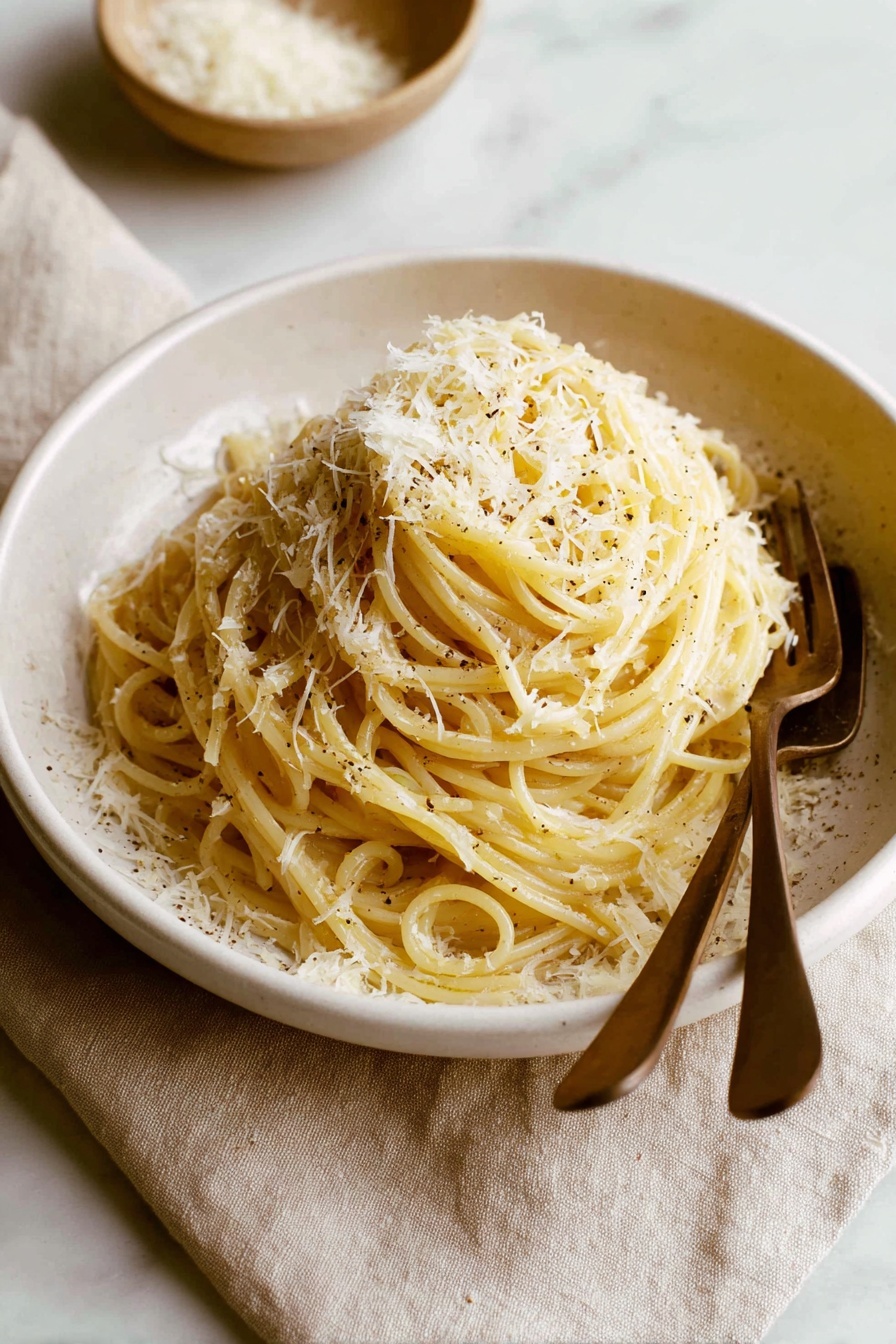
I like to keep garnishes simple to let the pasta shine, but an extra pinch of Pecorino Romano on top never hurts. Occasionally, I’ll add a few fresh basil leaves or a light drizzle of good quality olive oil to brighten the dish a bit. A sprinkle of freshly ground black pepper right before serving amps up the flavor and looks appealing on the plate.
Side Dishes
This pasta pairs beautifully with a crisp green salad dressed lightly with lemon and olive oil, or some roasted vegetables like asparagus or broccoli. My family also enjoys serving it alongside garlic bread or a crusty baguette to soak up every last bit of that irresistible sauce.
Creative Ways to Present
For a dinner party, I like to twirl the pasta into neat little nests on each plate—it makes the presentation look elegant and inviting. You can also serve the pasta in shallow bowls and top with finely shaved Pecorino and a dusting of black pepper for a rustic yet polished look. Adding edible flowers or microgreens as a final touch can elevate the dish visually as well.
Make Ahead and Storage
Storing Leftovers
I’ve found this dish is best fresh, but if you do have leftovers, store them in an airtight container in the fridge for up to 2 days. To prevent the pasta from drying out, add a little splash of olive oil or reserved pasta water before sealing.
Freezing
Freezing cacio e pepe pasta isn’t my favorite because the cheese sauce can separate and get grainy when thawed. If you want to freeze, I recommend freezing just the cooked pasta without sauce and making the sauce fresh when reheating.
Reheating
Reheat leftovers gently on the stovetop over low heat with a splash of pasta water or broth to loosen the sauce. Stir continuously to bring back creaminess without drying out or clumping the cheese. Avoid microwaving if you can—that tends to make the sauce separate.
FAQs
-
What pasta is best for Cacio e Pepe Pasta Recipe?
Bucatini and spaghetti are the most traditional choices for cacio e pepe. Bucatini’s hollow center really helps catch the sauce, but spaghetti is a great substitute if you don’t have bucatini.
-
How do I prevent the cheese from clumping in the sauce?
The key is to use starchy, warm pasta water and toss the cheese in gradually over low heat. This helps the cheese melt smoothly into a creamy sauce instead of clumping.
-
Can I make this recipe vegan?
Yes! Swap the butter for a plant-based alternative and use nutritional yeast or a vegan cheese substitute instead of Pecorino Romano for a tasty dairy-free version.
-
Is it okay to make this dish ahead of time?
Since cacio e pepe is best enjoyed fresh for optimal creaminess, I recommend making it just before serving. However, you can cook the pasta ahead and combine with the sauce when ready to eat.
Final Thoughts
This Cacio e Pepe Pasta Recipe has become one of my all-time favorites because it’s simple, delicious, and feels like a special treat without needing a million ingredients or complicated steps. I hope you give it a try and discover just how easy it is to impress yourself and your loved ones with this classic Italian comfort food. Trust me, once you nail the technique, this dish will be a go-to when you want a fast, fabulous dinner that doesn’t skimp on flavor.
Print
Cacio e Pepe Pasta Recipe
- Prep Time: 5 minutes
- Cook Time: 10 minutes
- Total Time: 15 minutes
- Yield: 2 servings
- Category: Main Course
- Method: Stovetop
- Cuisine: Italian
Description
Cacio e Pepe is a classic Roman pasta dish that combines simple ingredients like Pecorino Romano cheese, freshly cracked black pepper, and butter to create a rich and creamy sauce that perfectly coats al dente bucatini or spaghetti. This quick and easy recipe delivers authentic Italian flavors in under 20 minutes, ideal for a comforting yet elegant meal.
Ingredients
Pasta
- 8 oz dried bucatini or spaghetti
Sauce
- 2 tbsp unsalted butter
- ½ cup freshly grated Pecorino Romano cheese, plus more for garnish
- ½ tsp cracked black pepper, toasted
Instructions
- Boil pasta: Fill a large pot with water and bring it to a rolling boil over high heat. Add a small handful of salt to the boiling water to season it, then add the dried bucatini or spaghetti. Cook the pasta, stirring occasionally, until it is al dente, about 6 to 8 minutes.
- Reserve pasta water: Drain the cooked pasta, but be sure to reserve about 2/3 cup of the starchy pasta water before discarding the rest.
- Combine pasta and butter: Return the drained pasta back into the pot or transfer it to a large skillet placed over low heat. Add the reserved pasta water and the unsalted butter. Toss the pasta gently until the butter is melted and the water begins to create a silky base.
- Add cheese and pepper: Sprinkle the freshly grated Pecorino Romano cheese and toasted cracked black pepper over the pasta. Continue tossing thoroughly until the cheese melts and combines with the butter and pasta water to form a creamy, luscious sauce coating every strand of pasta.
- Serve: Transfer the pasta to serving plates and garnish with additional grated Pecorino Romano cheese. Serve immediately for the best flavor and texture.
Notes
- Use warm pasta water when mixing the cheese with pasta to prevent clumping and help create a creamy sauce consistency.
- Toasting the black pepper enhances its flavor and adds a subtle smoky depth to the dish.
- Use freshly grated Pecorino Romano cheese for the best melt and authentic taste.
- The dish is best enjoyed immediately as the sauce can thicken as it cools.
Nutrition
- Serving Size: 1 serving
- Calories: 480 kcal
- Sugar: 1 g
- Sodium: 600 mg
- Fat: 18 g
- Saturated Fat: 11 g
- Unsaturated Fat: 6 g
- Trans Fat: 0 g
- Carbohydrates: 62 g
- Fiber: 3 g
- Protein: 18 g
- Cholesterol: 45 mg