

If you’ve been on the hunt for that perfect light, fluffy, and utterly delightful cake, then you’re in for a treat! This Japanese Strawberry Cake Recipe is a fan-freaking-tastic dessert that’s delicate yet packed with fresh strawberry goodness and whipped cream that melts in your mouth. I absolutely love how this cake manages to be both elegant and comforting, making it my go-to for celebrations or when I just want to treat myself and my family. Stick around and I’ll walk you through every step so you can nail this beautiful cake right in your own kitchen.
Why You’ll Love This Recipe
- Light & Fluffy Texture: Thanks to the water bath and gentle folding, the sponge is incredibly moist and tender.
- Fresh Strawberry Flavor: Macerating the berries with sugar brings out their natural sweetness, perfect for layering.
- Simple Ingredients: Using basic pantry staples that come together effortlessly to create a stunning cake.
- Customizable Frosting: You can go for stabilized or regular whipped cream based on your timing and preferences.

Ingredients You’ll Need
The magic in this Japanese Strawberry Cake Recipe really shines through the balance of ingredients. Each one plays a specific role: from the milk and butter creating a smooth base to the fresh strawberries bringing that juicy pop of color and flavor.

- Whole milk: Adds moisture and tenderness to the sponge without weighing it down.
- Unsalted butter: Melts perfectly in the milk for richness without overpowering the delicate flavor.
- Cake flour: The lower protein flour ensures a soft crumb that’s not chewy like all-purpose flour sometimes is.
- Egg yolks & egg whites: These create structure and lift; beating the whites properly is key.
- Sugar: For sweetness and to stabilize your meringue when added slowly to the egg whites.
- Strawberries: Fresh and ripe, they should be juicy and sweet for both the cake layers and decoration.
- Heavy whipping cream: Whipped just right to frost and support the lightness of the cake.
- Confectioners sugar: Helps sweeten and stabilize the cream smoothly and evenly.
- Gelatin (optional): Useful if you want a stabilized whipped cream that holds up better for decorations.
- Sugar and hot water (for syrup): Keeps your cake moist and adds an extra layer of flavor, especially when you mix in strawberry syrup.
Variations
I love keeping this recipe flexible because it suits so many occasions and tastes. Over time, I’ve tried a few twists that changed it up just enough to keep it exciting. Feel free to tailor the cake to your preferences.
- Matcha Twist: Adding a teaspoon of matcha powder to the batter gives the cake a beautiful green hue and subtle earthy flavor—a favorite when I want something a bit different yet traditional.
- Vegan Adaptation: Though the original uses eggs and dairy, you can try aquafaba (chickpea water) for the meringue and coconut cream as a frosting alternative, but this requires a few more tweaks.
- Berry Medley: Swap some strawberries for raspberries or blueberries to play with flavor contrasts and colors.
- Chocolate Layer: For a fun treat, fold in some cocoa powder into half the batter for a marbled effect that pairs amazingly with the strawberries.
How to Make Japanese Strawberry Cake Recipe
Step 1: Preparing the Cake Batter Perfectly
Start by lining your cake pan with parchment paper, which really helps with easy removal later on—a little kitchen hack I discovered after struggling to get my cakes out perfectly. Don’t forget to preheat your oven to 325°F (160°C) and prepare your water bath setup; this step is crucial for the tender texture you’re aiming for. When melting the milk and butter, I like to use the microwave for quick and even heating, but keep an eye so it doesn’t boil over.
Next, sift the cake flour carefully into the milk mixture to avoid lumps; I always sift twice just for extra smoothness. After mixing in the yolks, beat the egg whites to glossy, medium peaks and gently fold them into the batter. This folding step is so delicate – you want to preserve all that fluffy air, so I find using a rubber spatula with a light hand does wonders. Pour the batter into your pan and give it a couple of taps on the counter to release large bubbles.
Step 2: Baking and Cooling with Care
Place your cake pan inside the water bath pan and add hot water reaching about an inch high—it might seem fancy, but it’s this steam that makes your sponge incredibly moist. Bake for about 1 hour and 30 minutes; resist the urge to peek in too soon, I learned this the hard way! The cake is done when a skewer comes out clean and the edges pull slightly away from the pan. Once done, run a knife around the edges and flip the cake onto a cooling rack. I always let it cool completely, because warm cake will ruin the frosting and the assembly.
Step 3: Macerating Strawberries and Preparing the Syrup
This is my favorite part that really brings the flavor together! Slice fresh strawberries and toss them with sugar to macerate, which means they’ll release their juice and become sweeter—perfect for layering. I usually let mine sit for at least an hour, or up to two if you can wait. Meanwhile, mix sugar with hot water to make the cake syrup—drizzling this onto the layers keeps everything moist and luscious. If you’re up for a little extra strawberry kick, add some of that lovely strawberry juice from the macerating bowl to your syrup; just expect a slight pink tint on your cake slices, which I think only adds charm.
Step 4: Whipping Cream That Holds Up
Whipping the cream is where you get to decide: stabilized or regular. When I’m decorating ahead of time or worried about warm kitchens, I trust the gelatin method. It’s a bit extra but results in a cream that keeps its shape beautifully. Just be careful not to over-whip after adding the gelatin, or the texture will get weird. If you want to keep it simple, regular whipped cream is still divine—just be sure to serve soon after, since it’s more delicate. Sifting confectioners sugar straight into the cream helps it whip better and sweeter without graininess.
Step 5: Assembling Your Masterpiece
Once cooled, trim the cake top lightly to remove browned bits—this keeps every bite tender and neat. Splitting the cake into two layers might feel intimidating at first, but those toothpick guides are a lifesaver and help keep everything even. Start brushing syrup onto each layer for moisture, then add a generous layer of whipped cream followed by those beautifully macerated strawberries. Another layer of cream on top of the strawberries seals in that freshness. Carefully sandwich your layers, then coat the cake in thin layers of cream, smoothing as you go—the cream acts like glue, so don’t be shy with the spreading! I love using any leftover cream to pipe pretty decorations or rosettes on top. Last but not least, crown your cake with the remaining strawberries for a picture-perfect finish. If using stabilized cream, pop it in the fridge for at least 30 minutes so the decoration sets.
Pro Tips for Making Japanese Strawberry Cake Recipe
- Perfect Meringue Peaks: Beat your egg whites until medium peaks form, which means they hold shape but still have a slight curve at the tip, not stiff or dry.
- Water Bath Magic: Ensuring your cake pan is well wrapped with foil and water covers the pan to the right depth helps avoid soggy bottoms but keeps humidity high for moist crumb.
- Gentle Folding: I always use a lazy figure-eight motion to fold in egg whites, preserving air without creating lumps.
- Syrup Soak Rack: Don’t skip brushing the cake layers with syrup; it’s the secret to moist slices that don’t crumble when you cut them.
How to Serve Japanese Strawberry Cake Recipe

Garnishes
I usually keep garnish simple and elegant—fresh whole strawberries halved or left whole depending on their size. Sometimes I add a few mint leaves for a pop of color and freshness. A light dusting of powdered sugar over the top before serving adds just the right touch of sweetness and elegance. If I’m feeling fancy, a few edible flowers have made rare appearances and they wow guests every time!
Side Dishes
This cake shines as the star, but if you want to round your dessert table, I often pair it with a scoop of matcha ice cream or a simple green tea to balance the sweetness. Light fruit salads or a citrus sorbet also complement it beautifully, giving a fresh contrast and palate cleanser between slices.
Creative Ways to Present
For special occasions, I like to serve Japanese Strawberry Cake slices on pretty plates with a drizzle of strawberry sauce or even a balsamic reduction for a surprising twist. Layering the cake in clear glass trifle bowls creates a stunning visual of cream, strawberries, and sponge layers. Another fun idea is to make mini versions using cupcake molds lined with parchment—same recipe, bite-size wow factor!
Make Ahead and Storage
Storing Leftovers
Leftovers keep well in the fridge, wrapped loosely with plastic wrap or stored in an airtight container to prevent the whipped cream from drying out. I recommend enjoying within 2-3 days, as the fresh strawberries can release moisture over time making the cake a bit soggy. Keeping the cake chilled but not too cold preserves all that delicate flavor and texture.
Freezing
Freezing a whole Japanese Strawberry Cake is tricky due to the fresh strawberries and cream, but I’ve had success freezing individual slices. I wrap each slice tightly in plastic wrap and then again in foil. When ready to eat, I thaw slices overnight in the fridge. The texture changes slightly, but the flavor remains delightful—perfect for if you want to prep ahead.
Reheating
Since this is a cream-based cake, reheating isn’t ideal. But if you want to bring refrigerated cake closer to room temperature for the best texture, simply let it sit out for about an hour before serving. If your cream has firmed from chilling, this softens it beautifully without drying out the cake.
FAQs
-
What makes Japanese Strawberry Cake different from regular strawberry shortcake?
The key difference lies in the sponge texture—the Japanese Strawberry Cake uses a soft, moist sponge made with a water bath that creates a light and airy crumb. It’s less dense than traditional shortcakes, and the whipped cream frosting is ultra-smooth and often stabilized for a refined finish.
-
Can I make this cake without gelatin?
Absolutely! The gelatin is optional and only needed if you want a stabilized whipped cream that holds shape longer, especially in warm environments or for decorative piping. If you’re serving the cake soon after assembling and prefer a lighter cream, just skip the gelatin and use regular whipped cream.
-
How do I know when the cake is done baking?
After baking for about 1 hour 30 minutes in the water bath, insert a skewer or toothpick into the center of the cake. If it comes out clean or with a few moist crumbs, the cake is ready. Also, the edges should pull slightly away from the pan, which is a good visual cue not to open the oven too early.
-
How do I slice the cake evenly?
Use toothpicks to mark an even line around the cake’s circumference at the height where you want to slice. Then use a serrated knife and a gentle sawing motion to cut along the toothpick guide. This helps keep layers straight and uniform without squishing the cake.
-
What’s the best way to whip cream for this cake?
Start with cold cream and a chilled mixing bowl for best results. Add sifted confectioners sugar gradually. Whip on medium speed until soft peaks form—stop as soon as peaks hold shape but still look silky. If using gelatin, fold it in carefully without over-whipping to avoid separation.
Final Thoughts
This Japanese Strawberry Cake Recipe holds a special place in my heart because it manages to be both simple and stunning at the same time. I love how it brings people together—my family goes crazy for how light and fresh it tastes, and it always feels like a little moment of celebration every bite. If you’ve been wondering how to make a beautiful, delicate cake that truly impresses without requiring complex techniques, you’ll really enjoy making this one. Trust me, once you try it, it will transform how you think about homemade cakes.
Print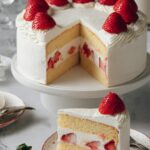
Japanese Strawberry Cake Recipe
- Prep Time: 1 hour
- Cook Time: 1 hour 30 minutes
- Total Time: 3 hours 30 minutes
- Yield: 8 servings
- Category: Cake
- Method: Baking
- Cuisine: Japanese
- Diet: Vegetarian
Description
This Japanese Strawberry Cake is a delicate and airy sponge cake layered with lightly sweetened whipped cream and fresh macerated strawberries. Featuring a moist texture from a gentle water bath baking technique and a smooth whipped cream frosting, this cake captures the subtle sweetness and freshness that makes it a classic in Japanese patisserie. Perfect for special occasions, it combines elegant simplicity with fresh fruit flavors.
Ingredients
Cake
- 80 g (1/3 cup) whole milk
- 50 g (3 1/2 tablespoons) unsalted butter
- 75 g (1/2 cup + 1/2 tablespoon) cake flour
- 4 large egg yolks
- 4 large egg whites
- 70 g (5 1/2 tablespoons) sugar (caster sugar if available)
Strawberries
- 12 oz to 1 lb (340 g to 450 g) strawberries, divided
- 1 1/2 teaspoons sugar
Whipped Cream Frosting
- 280 g (10 oz) heavy whipping cream
- 2 tablespoons confectioners sugar
- 3/4 teaspoon gelatin (Optional)
- 2 tablespoons cold water (Optional)
Cake Syrup
- 2 tablespoon sugar
- 3 tablespoons hot water
Instructions
- Prepare the cake: Line an 8-inch round cake pan with parchment paper and preheat the oven to 325°F (160°C). Prepare a water bath by ensuring you have a high-walled pan for the cake pan with about 1 inch of hot water to bake the cake gently.
- Make cake batter: Melt the butter in milk and mix together. Sift cake flour into the mixture and fold gently until smooth. Incorporate the egg yolks evenly.
- Whip egg whites: Beat egg whites until frothy, gradually adding sugar to reach glossy medium peaks. Fold a quarter of the whites into the yolk mixture to lighten, then fold this mixture back into the remaining whites until smooth, taking care not to overmix.
- Bake the cake: Pour batter into prepared pan, tap to release air bubbles, and place the pan in the water bath. Bake for 1 hour and 30 minutes or until a skewer comes out clean and the cake pulls away from the pan. Cool completely after removing from pan.
- Macerate strawberries: Slice 225 g (8 oz) strawberries, toss with sugar, and let sit for 1 to 2 hours until glossy. Reserve the juice for syrup.
- Prepare cake syrup: Dissolve sugar in hot water and optionally mix in reserved strawberry juice to enhance flavor and add a slight pink tint to the cake layers.
- Prepare whipped cream: For stabilized cream, soften gelatin in cold water, melt, then whip cream with confectioners sugar to soft peaks. Fold gelatin mixture gently into the cream, whipping briefly to soft peaks. For regular cream, whip heavy cream with confectioners sugar to firm peaks.
- Assemble the cake: Level the cake top and slice the cake horizontally into two layers. Brush both layers with cake syrup. Spread a thin, even layer of whipped cream on the bottom layer, add sliced strawberries evenly, top with more whipped cream, then place the second cake layer on top.
- Frost the cake: Apply a crumb coat with thin cream layer all over the cake and smooth out the sides. Add a thicker layer of cream on top and sides and smooth. Optionally decorate with remaining strawberries and additional piped cream.
- Chill and serve: Chill stabilized cream cake in the refrigerator for at least 30 minutes before serving. If using regular whipped cream, serve immediately or refrigerate and consume within a few hours. Slice with a serrated knife, preferably after resting to room temperature for best texture.
Notes
- If you do not have a spinning cake stand, you can improvise by turning a bowl or the cake pan upside down and placing a flat plate or removable bottom pie pan on top to rotate easily.
- Use a water bath while baking to ensure even, gentle heat and moist sponge texture.
- Do not open the oven for the first hour of baking to prevent the cake from collapsing.
- Whip the cream just to soft peaks to prevent over-whipping and separation, especially when using gelatin.
- Macerating strawberries enhances their sweetness and moisture, improving flavor integration in the cake.
- Use a serrated knife for clean and neat slicing of the delicate sponge layers.
Nutrition
- Serving Size: 1 slice (1/8 cake)
- Calories: 280 kcal
- Sugar: 24 g
- Sodium: 105 mg
- Fat: 18 g
- Saturated Fat: 11 g
- Unsaturated Fat: 6 g
- Trans Fat: 0 g
- Carbohydrates: 22 g
- Fiber: 1 g
- Protein: 5 g
- Cholesterol: 105 mg